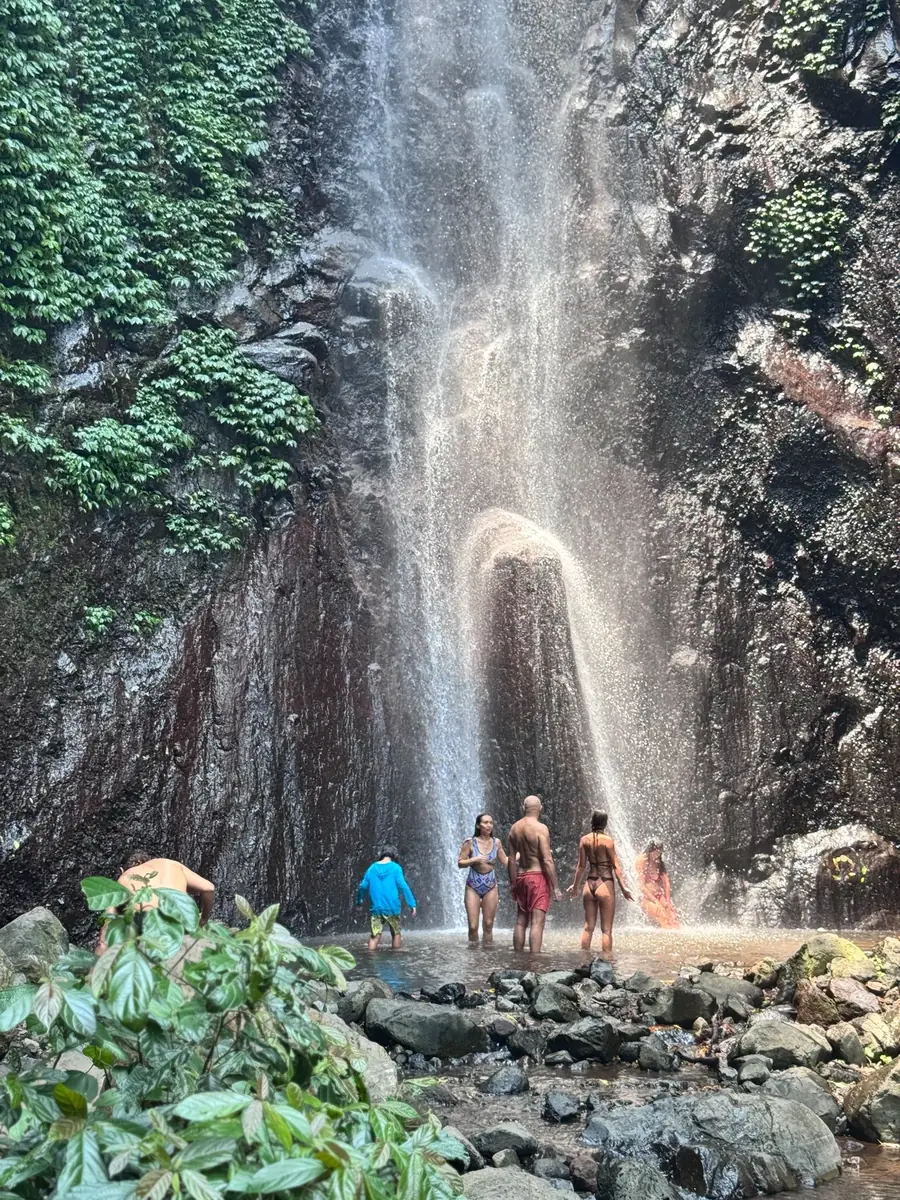
A Bali waterfall day can deliver the sensory reset photographs only hint at: cooler air, loud water, wet stone, jungle shade, and the immediate reward of reaching the bottom. It can also involve steep stairs, slick paths, humid climbs back up, changing water levels, and busy viewing areas.
Choose for the day you want
Waterfalls vary widely in access. Some are reached by developed stairways with changing rooms and vendors; others require rougher approaches, river crossings, or local guidance. Ask about the number and condition of steps, handrails, total walking time, swimming area, current strength, and whether the route is suitable after heavy rain.
A dramatic multi-stop route may look efficient on a map but feel rushed once traffic, parking, entrance procedures, stairs, changing clothes, and meals are included. One or two well-chosen stops often leave more time to enjoy the water and recover from the climb.
Wet-season judgment
February generally falls within Bali's wetter period, but conditions vary by day and area. Rain can increase flow and make vegetation vivid; it can also reduce visibility, make paths slippery, raise rivers, or make swimming unwise. Follow local closures and on-site guidance, and never enter water simply because others are doing it.
Wear secure footwear with traction, keep electronics protected, carry water, and use sun and insect protection appropriate to the day. Respect barriers, local customs, and the people who maintain access. Leave offerings and religious objects undisturbed.
Waterfalls in the retreat concept
A central-Bali waterfall outing is proposed for the Healthy as Hell itinerary. The exact waterfall, access level, transport, and swimming plan will be selected only after current conditions and supplier arrangements are reviewed. An image from a previous trip documents the inspiration; it does not identify or guarantee the future venue.