The best waterfall near Ubud is not necessarily the one with the largest drop or the most famous photograph. It is the one that fits the day’s conditions, the group’s mobility, the available time, and the experience you actually want. Some visits are built around swimming; others involve a scenic walk, steep stairs, or a quick viewpoint stop. Road traffic and access can turn two nearby pins on a map into a rushed day. Choose deliberately and let local conditions outrank a prewritten must-see list.
Choose by experience, not by ranking
Start by deciding what matters. Do you want a longer walk, an easy viewpoint, a place where swimming is permitted, or a quieter setting that may offer fewer facilities? A group with mixed abilities may enjoy one well-chosen waterfall more than a race through three. Ask about the number and condition of steps, handrails, changing facilities, toilets, parking-to-waterfall distance, and how much shade the route offers.
Online “best” lists can age quickly. Access rules, entrance arrangements, construction, and crowd patterns change, while recent rain can transform paths and water flow overnight. A driver or guide with current local knowledge can help, but you should still communicate your needs clearly. “We can do it” is less useful than a concrete description of terrain and timing.
Respect water and wet terrain
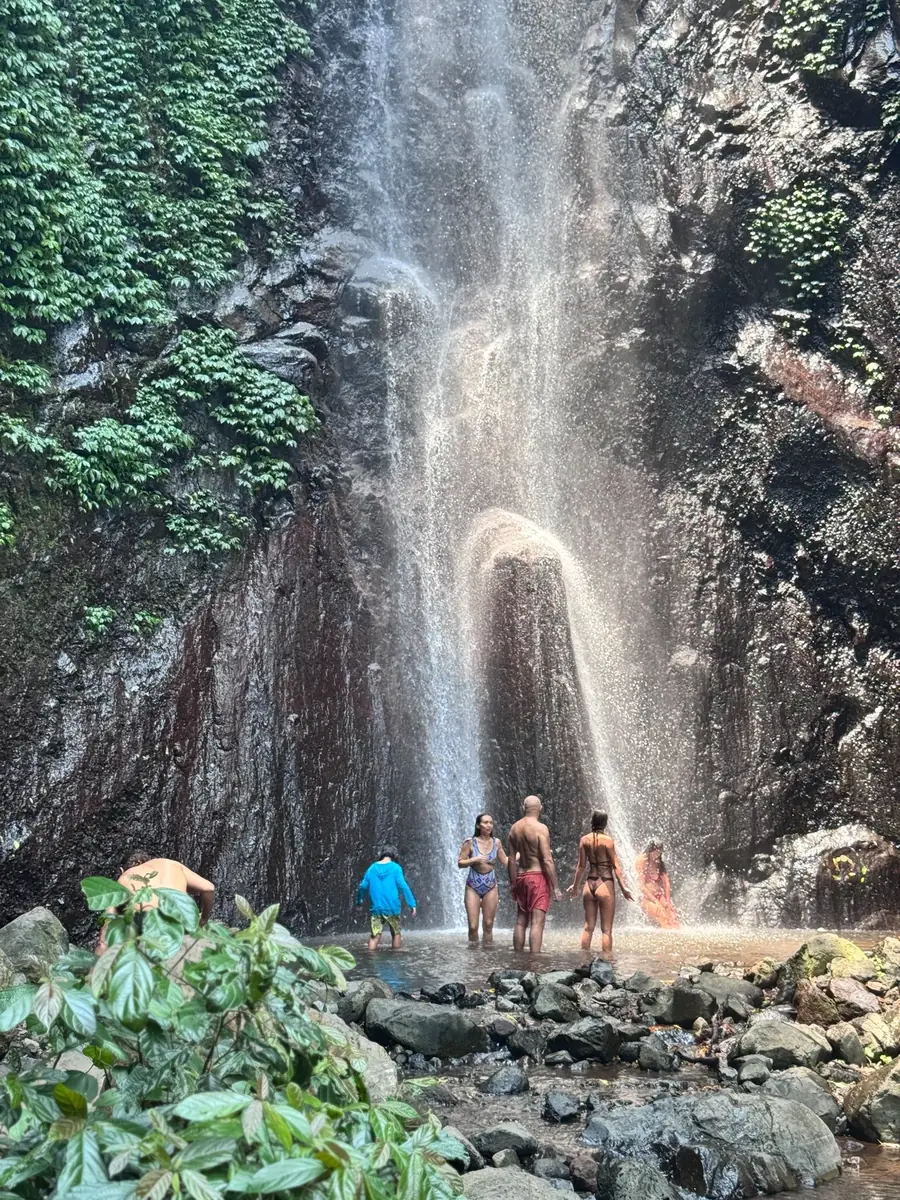
Waterfalls combine moving water, rock, height, and surfaces polished by many feet. Wear secure footwear with traction, keep hands available, and slow down on steps. Swimming conditions are not guaranteed simply because other visitors are in the water. Follow signs and staff guidance, stay out of closed areas, and do not climb barriers for a cleaner photo. Heavy rain upstream can matter even when the sky directly above you looks calm.
If swimming is allowed, enter only where directed and understand your own water confidence. Depth, current, visibility, and submerged rock can be difficult to judge. Never pressure a group member to get under the falls or jump. A retreat should explain how belongings are managed and where the group will regroup, particularly when phones, dry clothes, and footwear are scattered across a busy site.
Make room for the community around the attraction
A waterfall is not just content. It may sit within a village landscape, sacred context, working agricultural area, or locally managed visitor site. Pay required fees, follow dress and conduct expectations, and listen when access is limited for ceremonies or safety. Do not move offerings, enter restricted areas, fly a drone without appropriate permission, or photograph people as scenery.
Local businesses often provide drinks, meals, guiding, or changing facilities. Spending thoughtfully can support the people who maintain access, but visitors should still ask prices before accepting services. Carry out what you bring, reduce single-use items where practical, and avoid toiletries in natural water. “Leave no trace” is a useful baseline, though respectful travel also means noticing whose home you are visiting.
Design a day that still feels good afterward
Waterfall days can involve more driving and stair climbing than the photos suggest. Pair the outing with a nourishing meal and genuine recovery time rather than stacking it beside every other central Bali attraction. Bring water, rain protection, sun protection, a wet bag, and a change of clothes. Keep timing flexible so the group does not have to hurry on wet ground to preserve a dinner reservation.
For a February retreat, the plan should be especially adaptable because wetter conditions may change access or swimming. An alternative cultural, food, or movement experience keeps the day valuable without pretending safety decisions are optional. The point is to feel more alive in the landscape—not to collect proof that you reached every geotag.
- Ask about steps, railings, walk length, and changing facilities.
- Use current local advice for access and water conditions.
- Wear secure footwear and respect all closures.
- Allow time for transport, a meal, and recovery.
- Choose fewer stops when that creates a safer, richer day.
Good questions, straight answers
Frequently asked questions
01Can you swim at waterfalls near Ubud?
At some sites and under some conditions, yes. Permission and safety can change with water flow, weather, and local management, so follow current signs and staff guidance.
02What shoes should I wear to a Bali waterfall?
Wear secure, comfortable footwear with traction that can handle wet steps or mud. Loose flip-flops may be unsuitable for longer or slippery access routes.
03How many waterfalls should I visit in one day?
That depends on travel time, access, and your group. One or two well-matched stops often allow more time to swim, walk, eat, and recover than a long checklist does.
Keep exploring
Read this next
Go deeper on the destination