February in Bali sits within the island’s wetter part of the year. That does not mean continuous rain, and it does not guarantee postcard sunshine. It means you should expect warmth, humidity, changing skies, and a meaningful chance that rain alters the timing or feel of a day. For travelers who can trade rigid expectations for flexible plans, the season can still suit waterfalls, movement, cultural exploration, meals, and time together. Preparation matters more than pretending the weather can be promised.
Think in patterns, not guarantees
Seasonal descriptions are broad patterns across an island with coastlines, hills, and local microclimates. A forecast shown weeks ahead cannot tell you exactly when rain will fall over a particular trail or beach. Showers may be brief or persistent; conditions can differ between central Bali and an offshore island on the same day. Use recent local forecasts near departure, then reassess each morning with your guide or host.
Rain changes more than whether you need an umbrella. Trails and stone steps can become slick, road journeys can take longer, visibility can shift, and boat crossings or water activities may be adjusted. A responsible itinerary has room to move an outdoor activity, choose a safer route, or substitute something worthwhile. Flexibility is not a failure of planning; it is part of planning responsibly in a tropical destination.
Plan for heat, humidity, and wet gear
Light, breathable clothing is usually more comfortable than heavy cotton that stays damp. Pack a compact rain layer, quick-drying activewear, secure footwear with useful traction, dry bags or zip pouches for electronics, and a change of clothes for longer outings. Hotel air-conditioning can feel cool after a wet day, so one light layer earns its place. Sun protection still matters when clouds are present.
Humidity and activity can make hydration easy to underestimate. Carry water, take sensible breaks, and follow local guidance. If you rely on medication or equipment, protect it from moisture and keep essential items in your carry-on. A small amount of preparation lets rain become atmosphere rather than a daily emergency. It also reduces the temptation to bring a suitcase full of “just in case” clothing that never dries.
Match activities to conditions
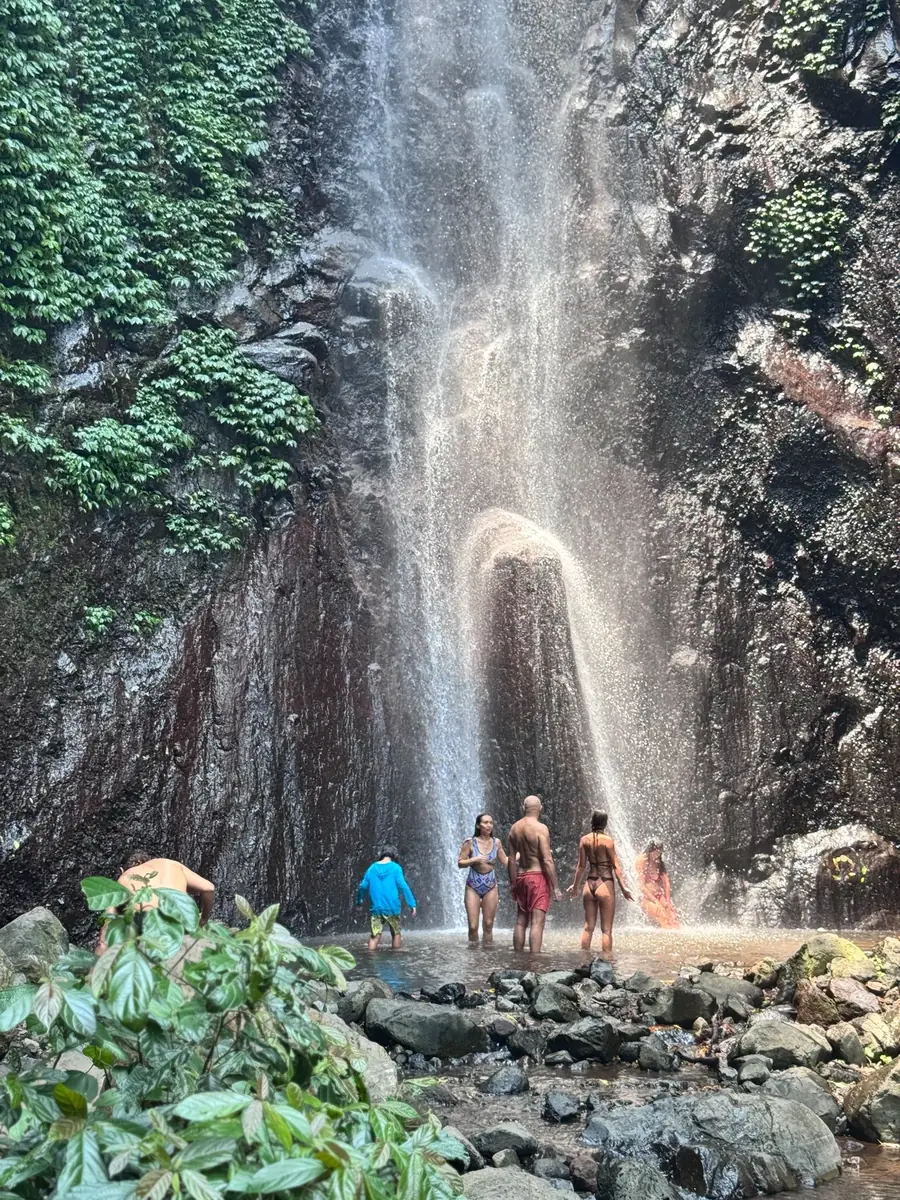
Waterfalls can look dramatic during the wetter season, but higher flow and wet access paths require judgment. A Mount Batur sunrise outing may have limited views or be changed if conditions are unsuitable. Snorkeling depends on marine conditions, not simply the date on the calendar. Never treat a specific view, crossing, or excursion as guaranteed, and be wary of anyone who does.
Build the trip around experiences that remain meaningful even when the sky changes: a nourishing meal, mobility session, cultural visit, conversation, massage, or unhurried afternoon can carry the day. Outdoor plans should remain central, but not brittle. On a hosted retreat, ask before booking how weather decisions are made, who has authority to cancel an activity, and whether alternatives are included or paid separately.
Keep logistics resilient
Leave margin around arrival, departure, and boat transfers. Same-day connections with no buffer can become stressful when roads, seas, or flights do not cooperate. Travel insurance may help with certain covered disruptions, but policies differ, exclusions apply, and coverage should be checked directly with the provider. Save important contacts and documents offline in case connectivity is inconsistent.
The most useful February mindset is neither pessimism nor denial. Expect to get wet at some point, bring what helps you stay comfortable, and let local safety decisions lead. Bali is not only a blue-sky backdrop. Its landscape, food, culture, and social energy remain present when a cloud arrives—and sometimes the shared story is the downpour everyone laughed through.
- Check short-range local forecasts instead of relying on seasonal averages alone.
- Keep a flexible day in the itinerary where possible.
- Protect shoes, electronics, documents, and essential medication from moisture.
- Accept that hikes, boats, and snorkeling may change for safety.
Good questions, straight answers
Frequently asked questions
01Does it rain all day in Bali in February?
Not necessarily, but extended rain is possible. Conditions vary by day and location, so plan for rain without assuming it will occupy every hour.
02Can I still hike Mount Batur in February?
Hikes may operate, but trail, wind, visibility, and storm conditions should be assessed locally. Follow qualified guide and operator decisions, and expect plans to change when conditions are unsuitable.
03Is snorkeling guaranteed in February?
No. Marine conditions can affect visibility, comfort, routes, and whether a trip should operate. Choose a program with a clear contingency plan.
Keep exploring
Read this next
Go deeper on the destination